
Restorative Dental Care in Lakeview and Alturas
At Crane Mountain Dental, our goal is to prevent dental problems before they occur. Unfortunately, this is not always possible due to poor oral hygiene, genetics, infrequent checkups, and other risk factors. This is why we also specialize in restorative dentistry. Our restorative services are designed to improve the function and aesthetics of your smile, as well as your overall oral health.
Restorative Dentistry provided by Dr. Mark Davis in Lakeview, OR and Dr. Dallin DeGraffenried in Alturas, CA at Crane
Mountain Dental.
Restorative Dentistry
Restorative Dentistry: Rebuilding Your Smile and Confidence
Restorative dentistry focuses on repairing damaged or missing teeth so patients can enjoy a healthy, comfortable, and confident smile again. Over time, teeth can be affected by decay, injury, wear, or gum disease, leading to problems with chewing, speaking, and overall oral health. Restorative treatments are designed not only to fix these issues but also to preserve the natural look and function of your teeth.
When a tooth is compromised, ignoring the problem can often make it worse. Small cavities can grow, cracked teeth can weaken further, and missing teeth can cause nearby teeth to shift. Restorative dentistry addresses these concerns early, helping to prevent more complex dental problems down the road. By restoring the structure of your teeth, these treatments support better bite alignment, protect your jaw health, and improve everyday comfort.
Common restorative procedures include dental fillings, crowns, bridges, dentures, and dental implants. Each treatment is carefully chosen based on your individual needs, ensuring the most effective and long-lasting result. Modern dental materials also allow restorations to blend seamlessly with your natural teeth, so your smile looks as good as it feels.

How Restorative Dentistry Improves Quality of Life
Beyond repairing teeth, restorative dentistry plays an important role in improving overall quality of life. Teeth that are damaged or missing can make eating difficult, limit food choices, and even cause pain or sensitivity. Restorative treatments help restore proper chewing function, allowing patients to enjoy a balanced diet without discomfort or worry.
Confidence is another major benefit. A healthy smile can have a positive impact on how you feel in social and professional settings. Many patients feel self-conscious about broken, discolored, or missing teeth, which may cause them to avoid smiling or speaking freely. Restorative dentistry helps rebuild not just teeth, but also self-esteem, allowing you to smile with confidence again.
Additionally, restoring damaged teeth helps protect your oral health in the long term. Properly restored teeth are easier to clean and maintain, reducing the risk of future decay or gum disease. Restorations also help distribute bite forces evenly, preventing excessive stress on surrounding teeth and the jaw.
With today’s advanced techniques and patient-focused approach, restorative dentistry is more comfortable and effective than ever. Treatments are tailored to your needs, ensuring results that are functional, natural-looking, and durable. Whether you need to repair a single tooth or replace several, restorative dentistry provides solutions that help you maintain a healthy smile for years to come.
Services We Offer
Dental Fillings
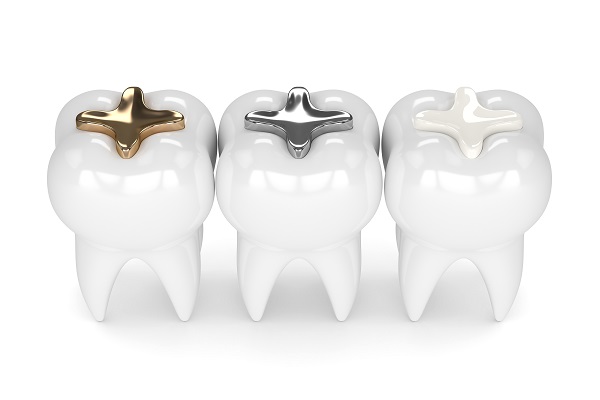
Dental fillings are the best way to restore minor to moderate instances of tooth decay. Most fillings these days consist of a material known as composite resin. Composite resin is an aesthetically-pleasing material that we color-match to the existing shade of your enamel. For this reason, a composite filling is virtually indistinguishable from the rest of your tooth.
Dental Crown
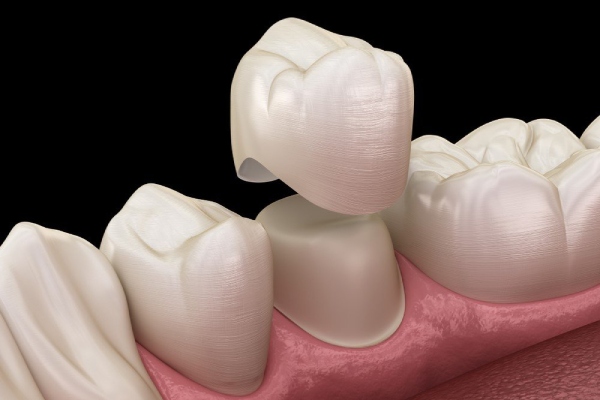
A dental crown is a tooth-shaped cap that improves the structure and cosmetics of a damaged or decayed tooth. During the procedure, your tooth must be completely reshaped to accommodate the shape of the crown. Once the tooth is reshaped, we will permanently bond the crown to the enamel using a special adhesive. Many crowns are fabricated these days with porcelain, due to its unmatched aesthetics.
Dental Bridge
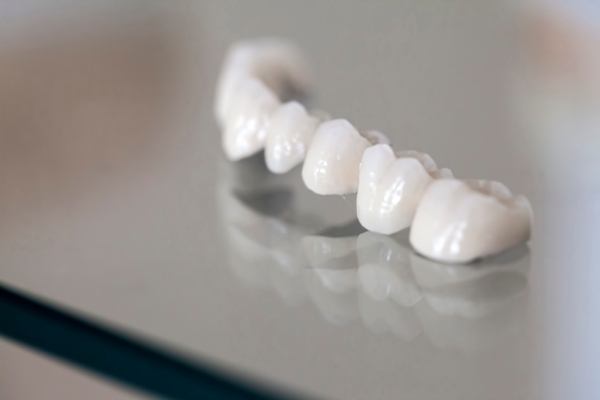
A dental bridge is a tooth replacement that typically consists of two dental crowns linked together by a pontic, or false tooth. A traditional bridge is supported by the two surrounding teeth, known as abutment teeth, that we reshape to receive the crowns. A bridge can also be supported by a series of dental implants if multiple adjacent teeth are missing. If you are missing a tooth, a bridge will prevent the remaining teeth from shifting out of their proper position.
Dental Implant
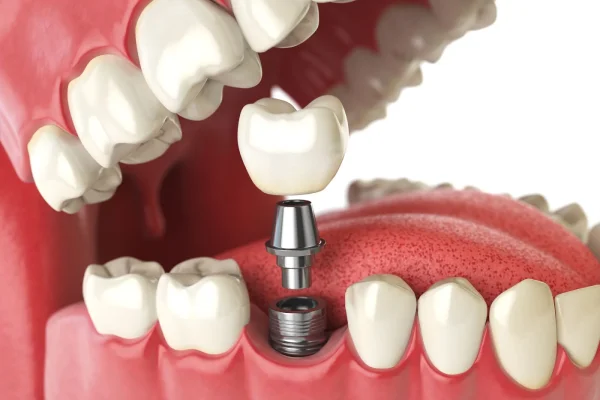
A dental implant is a small titanium post that we surgically embedded into the jawbone. The implant serves as the root component of a prosthetic tooth. Once the implant is in place, it will fuse to the bone during the process of osseointegration. Osseointegration allows the implant to support a restoration against the strongest forces of your bite. For this reason, dental implants are widely considered to be the next best thing to your natural teeth.
Dentures
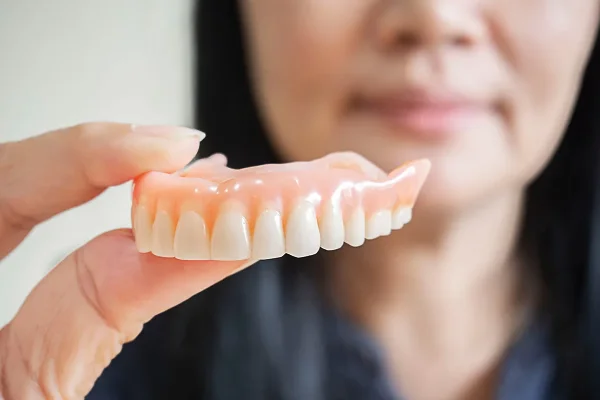
A denture is a removable appliance that is usually used to replace one or more missing teeth. A partial denture usually attaches to the surrounding teeth with metal clasps. A complete denture consists of a flesh-colored acrylic base that supports a complete arch of prosthetic teeth. We offer custom-fit dentures as a more comfortable, functional, and durable solution.
Inlays & Onlays
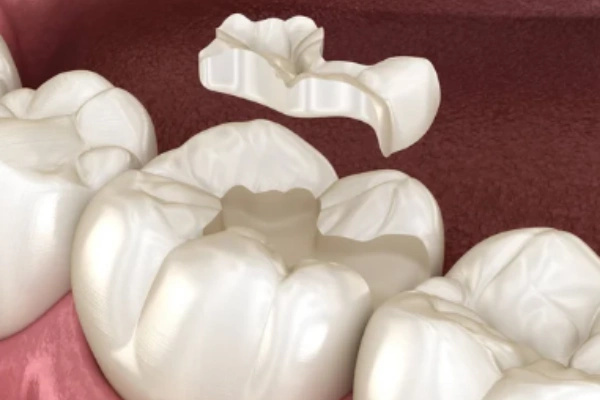
Inlays and onlays are ideal for areas of decay too large for a filling, but not large enough to require the placement of a dental crown. The restoration is considered an inlay if it is placed within the occlusal (bite) surface of a tooth. The restoration is considered an onlay if it extends beyond one or more of the occlusal cusps.
Tooth Extraction
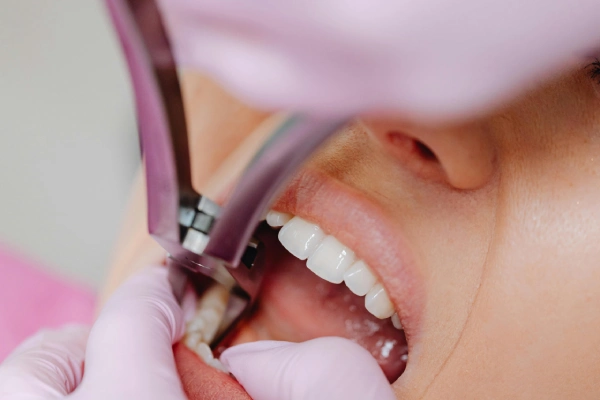
There are two types of tooth extractions : simple and surgical. We perform a simple extraction on a tooth that has already erupted above the gumline. We perform a surgical extraction on a tooth that has become impacted, or has yet to erupt, such as wisdom teeth. Extraction may be necessary to prevent the spread of infection and other complications.
Root Canal Treatment
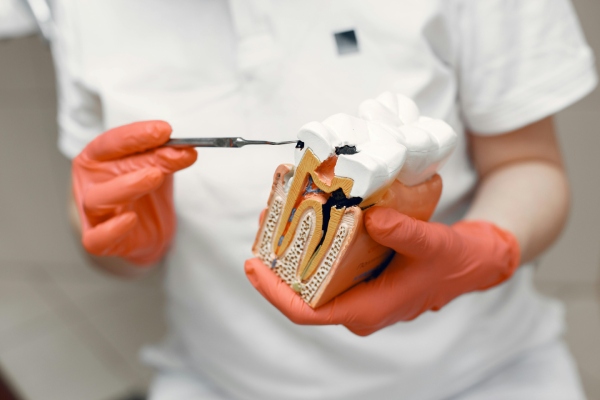
A root canal is a last-ditch effort to save a tooth from extraction. We may recommend a root canal if an infection has spread to the “pulpy” center of the tooth that contains nerve endings and other connective tissues. Once the infection has been removed, we fill the canals with a rubber-like material known as gutta-percha. A tooth that has received root canal treatment typically needs to be capped with a crown.
FAQS
Restorative dentistry focuses on repairing and replacing damaged or missing teeth to improve the function, aesthetics, and overall oral health of your smile. It includes treatments such as fillings, crowns, bridges, implants, and more.
Dental fillings are used to restore teeth affected by minor to moderate decay. They involve removing the decayed portion of the tooth and filling the space with a durable material, such as composite resin, to restore its shape and function.
A dental crown is a tooth-shaped cap placed over a damaged or decayed tooth to restore its structure and appearance. A dental bridge, on the other hand, replaces one or more missing teeth by anchoring a false tooth (pontic) to the surrounding teeth or dental implants.
Dental implants are titanium posts surgically placed into the jawbone to act as artificial tooth roots. They fuse with the bone through a process called osseointegration, providing a strong foundation for crowns, bridges, or dentures to restore missing teeth.
Inlays and onlays are restorations used to repair teeth with decay or damage too extensive for a filling but not severe enough to require a crown. Inlays fit within the tooth's biting surface, while onlays cover one or more of the tooth's cusps.
A tooth extraction may be necessary if a tooth is severely decayed, damaged, or impacted (such as wisdom teeth). It is also recommended in cases where the tooth poses a risk of infection or complications that could affect overall oral health.